
ਪੰਜਾਬੀ ਸਿੱਖੋ!
Learn Punjabi For Little Kids (Ages 0-6)
Introduction to Punjabi & Gurmukhi
Remember!
Punjabi is a language (what we speak). Gurmukhi is a script (how we write Punjabi). It would be more accurate to say one speaks Punjabi and reads or writes Gurmukhi.
About Punjabi Language
What is Punjabi and who speaks it?
What is Punjabi?
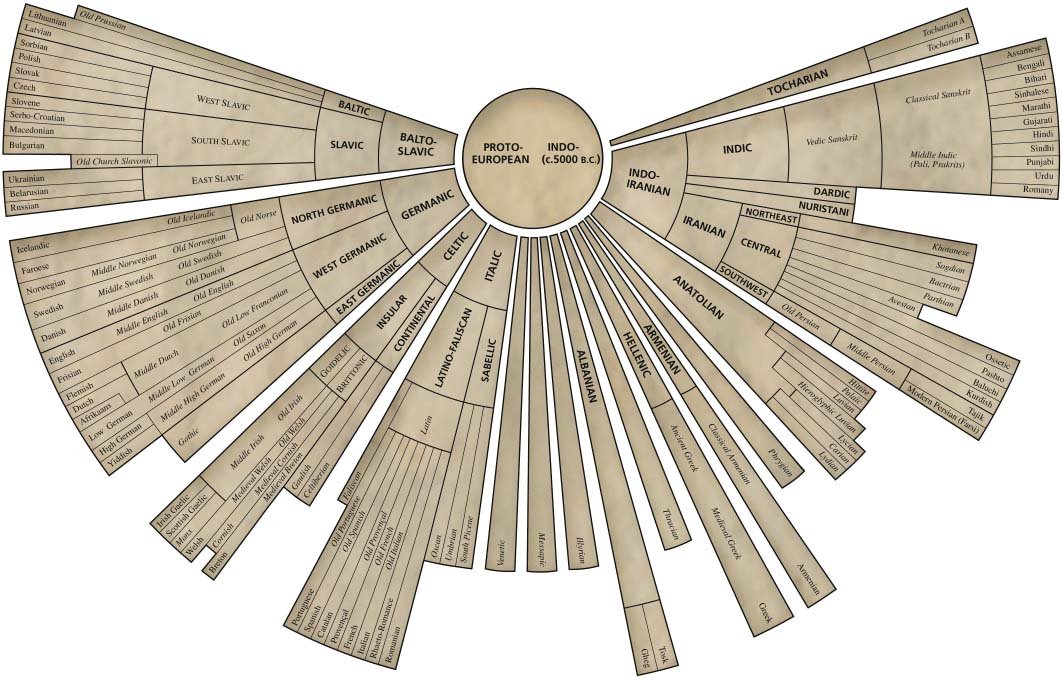
Punjabi (Gurmukhi: ਪੰਜਾਬੀ) is an Indo-Aryan language spoken by 102 million native speakers worldwide, making it the 9th most widely spoken language in the world.
It is the native language of the Punjabi people who inhabit the historical Punjab region of Pakistan and India. Punjabi is the only tonal language among the Indo-Aryan languages — this means that the tone of your voice can change the meaning of a word!
Two Scripts
There are 2 main scripts used to write Punjabi:
Gurmukhi — used by Punjabi-speaking Sikhs, written left to right. Developed by Guru Angad Sahib Ji.
Shahmukhi — Perso-Arabic script used by Punjabi-speaking Muslims, written right to left.
Sentence Structure
Punjabi follows SOV (Subject-Object-Verb) order, unlike English which is SVO.
ਮੁੰਡਾ ਸੇਬ ਖਾਂਦਾ ਹੈ
muṇḍā (boy) + sēb (apple) + khāndā hai (eats)
= "A boy eats an apple"
The Gurmukhi Script
How Gurmukhi was created and where it's used
History of Gurmukhi
Gurmukhi was standardised by the second Sikh Guru, Sri Guru Angad Sahib Ji, in the 16th century. He modified and polished the older Landa script to better represent Punjabi sounds and tonal expressions.
The whole of the Guru Granth Sahib's 1430 pages are written in Gurmukhi. The name Gurmukhi means "from the mouth of the Guru".
Where is Gurmukhi Used?
Gurmukhi is primarily used in the Punjab state of India where it is the sole official script for all official and judicial purposes.
The script is also widely used in Haryana, Himachal Pradesh, Jammu, and Delhi. Gurmukhi has also been adapted to write other languages such as Braj Bhasha, Sanskrit, and Sindhi.
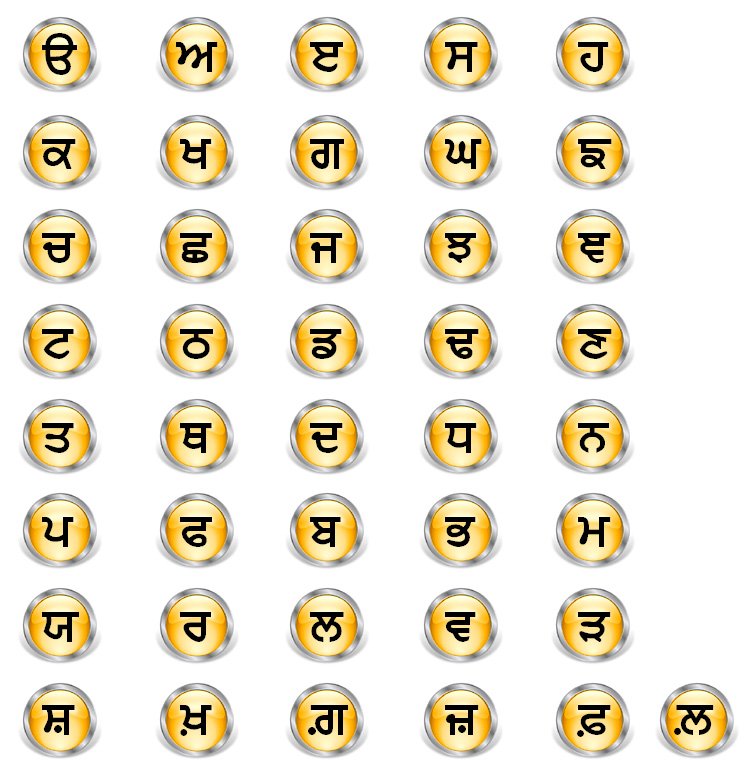
Essential Features of Gurmukhi
Key things to know about the Gurmukhi script
- Gurmukhi follows a "one sound, one symbol" principle — the most complete and accurate way to represent Punjabi sounds.
- The script has 41 letters including 38 consonants and 3 basic vowel sign bearers, plus 10 vowel signs and 3 auxiliary signs.
- Written and read from left to right, just like English.
- There is no concept of upper or lower case letters in Gurmukhi.
- The alphabet is arranged in a logical fashion: vowels first, then consonants grouped by type (Gutturals, Palatals, Cerebrals, Dentals, Labials).
- This is a syllabic script where all consonants have an inherent vowel. Diacritics (marks above, below, before, or after) are used to change the vowel sound.
- When letters appear at the beginning of a syllable, vowels are written as independent letters.
- When certain consonants occur together, special conjunct symbols are used which combine the essential parts of each letter.
- Punjabi spellings are regular and relatively simple to learn, though there may be some variations.
- There are no articles such as "a" and "the" in Punjabi.
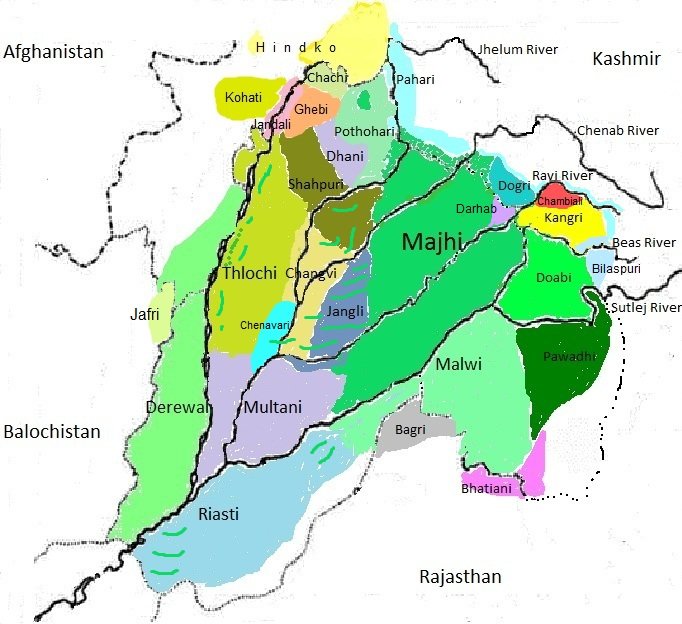
Punjabi Dialects
According to the Linguistic Department of Punjabi University, Patiala
Majhi
Spoken in the heart of Punjab — Lahore, Sialkot, Gujranwala, Gurdaspur, Amritsar. Linguists call it the "standard dialect" as it has been influenced by all other dialects.
Malwai
Spoken in east Punjab — Ludhiana, Ambala, Bathinda, Ganganagar. This is the southern and central part of present-day Indian Punjab.
Doabi
Spoken in the land between the rivers Beas and Satluj. "Do Aaba" literally means "the land between two waters" in Persian.
Pothohari
Spoken from Kashmir in the north to as far south as Jehlum and Gujar Khan, including Islamabad, the capital of Pakistan.
Multani
Spoken in Multan, Bahawalpur, and the southern deserts of Punjab. Also known as Saraiki. Known as a very sweet and melodious dialect.
Start Learning!
Explore the chapters below to learn Gurmukhi step by step
ਮਾਤਰਾਂ (Matras) change how a consonant sounds!
Example: ਕ + ਾ = ਕਾ
Complete table of all Gurmukhi letter + matra (vowel sign) combinations.
Click any cell to hear its pronunciation.
← Scroll horizontally to see all columns →
Prepositions
We start with the prepositions:
Questions
To ask questions, use the following:
Adverbs
Some of the most important adverbs:
Pronouns
Most commonly used pronouns in Gurmukhi:
Possessive
To express the possession of something:
Verbs
Some random verbs to show how they are used:
Sentences
Some extra grammatical structures:
Greetings
We start with greetings and introductions.
Language & Age
More questions about language and age:
Understanding
If you don't understand something:
Origins & Profession
More personal information about origins and profession:
Help & Directions
Offering or asking for help and giving directions:
Good Wishes
Good wishes in Punjabi for holidays and occasions:
Travel & Buying
Punjabi expressions commonly used when traveling or buying:
Emergency
Survival phrases considered to be important in emergencies:
Click a number and a color to see objects:
ਬੋਲਣ ਦੀ ਪ੍ਰੈਕਟਿਸ (Speaking Practice)
Record yourself speaking these phrases:
ਸੁਣਨ ਦੀ ਪ੍ਰੈਕਟਿਸ (Listening Practice)
Listen to these Gurmukhi stories and songs:
ਭਾਸ਼ਾ ਸਾਥੀ (Language Partners)
Find Punjabi speakers near you:
📍 Join your local Gurdwara's Punjabi class
📱 Use apps like Tandem or HelloTalk
🎓 Ask your school for Punjabi language clubs
🔔 Daily Reminder
Get notified every day at 4 PM to practice Gurmukhi!